What the box office numbers actually say
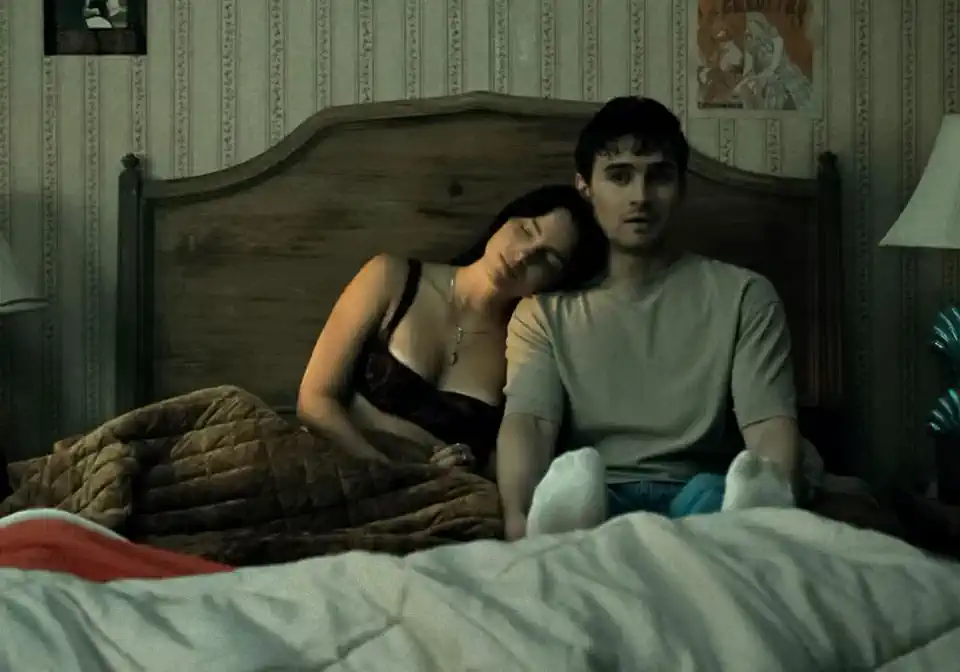
Obsession, the original horror romance directed by Curry Barker, has crossed $229 million worldwide, becoming Focus Features' highest-grossing release in the studio's history. The film opened independently for a $750,000 production budget, was acquired by Focus at the Toronto International Film Festival for $14-15 million – the highest TIFF price ever paid for a genre title – and dropped just 7 percent in its fourth weekend on a $25.6 million gross, setting the strongest fourth-weekend hold for any horror film in recorded chart history. Gizmodo mapped the financial milestones alongside the parallel run of Backrooms, contextualizing how original horror is operating inside the 2026 theatrical window.
Those numbers are not improvements on existing horror benchmarks. They are category-resetting against the conventional wisdom that mid-budget original horror has been killed off by streaming acquisition.
Why the $750K production budget is the most important number
Studios have spent the last five years arguing that original horror only works at one of two scales – micro-budget Blumhouse-style productions or franchise-anchored studio releases. Obsession lives in neither. Barker shot the film independently for the kind of budget normally reserved for short films, then sold the distribution rights at a studio-grade premium because the finished product was strong enough to justify the price.
That sequence – independent production at sub-million scale, festival acquisition at eight-figure scale, theatrical release at nine-figure return – is the most replicable economic model for original horror anyone has demonstrated this decade. The key constraint is creative discipline at the production stage, not capital availability, and that constraint is one the next wave of horror directors can actually meet.
The fourth-weekend hold tells us about word-of-mouth, not marketing
Modern wide releases tend to lose 50 to 65 percent of their gross between weekend one and weekend four. Obsession dropped 7 percent. That hold profile is not the result of any marketing spend Focus could have engineered. It is the result of audience word-of-mouth converting one ticket into multiple over a sustained run.
Word-of-mouth at that intensity is the single most important data point for evaluating whether a film is a fluke or a category-defining release. A 7 percent fourth-weekend drop is the kind of number streaming algorithms cannot manufacture and that studios cannot buy through paid promotion. Obsession earned it inside theatrical, which is part of what makes the run reproducible only inside the theatrical window.
What Barker's pre-Obsession catalog tells us about how this happened
Barker built his pre-Obsession audience through the horror short The Chair, the free-on-YouTube found-footage feature Milk & Serial, and the sketch comedy channel That's a Bad Idea co-run with partner Cooper Tomlinson. That public-facing catalog operated as a multi-year audience-development cycle without studio support.
By the time Obsession arrived, Barker had a credibility base that no first-time studio horror director typically has. The Focus acquisition was not betting on a single film. It was betting on a director with an existing audience relationship and demonstrated tonal consistency across multiple formats, and the bet paid out at category-changing scale.
The verdict on what Obsession's run actually proves
The strongest takeaway is that mid-budget original horror is not dead. It was waiting for a model that combined extreme production-cost discipline with a director-developed audience base, and Barker provided the working example.
The contrarian read is that the most consequential horror story of 2026 is not whether the next Blumhouse release performs. It is whether the next round of micro-budget independent horror directors can replicate Barker's pre-acquisition audience-development sequence, and the studios most likely to win the next decade of original-horror releases will be the ones acquiring those directors before they need a studio at all.