
What is actually being sold
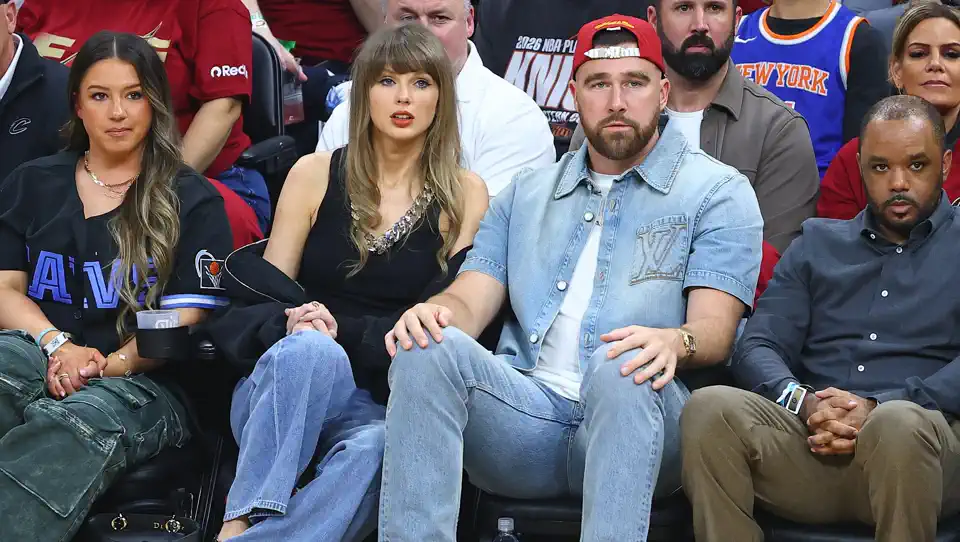
Auction platform The Realest has listed the literal courtside chair Taylor Swift occupied during the Cleveland Cavaliers vs. New York Knicks Eastern Conference Finals matchup at Rocket Arena on May 23, with an on-site authenticator present to verify her use of the seat. NBC New York reported the listing, the $100 opening bid that climbed past $6,000 within 38 bids, and the June 14 auction close date.
The chair itself is structurally unremarkable – a standard arena seat with the Cavaliers logo, arm rests, and a cup holder. What is being sold is the documented fact that Swift, accompanied by Travis Kelce, sat in that specific seat during a specific high-leverage playoff game.
Why this is not really a memorabilia sale
Traditional sports memorabilia operates on a value model anchored to the athlete's performance – game-used balls, jerseys with sweat-stain provenance, signed equipment. The Realest is selling a venue object that the celebrity did not use, did not modify, and did not perform with. The asset is the celebrity's documented presence at a specific cultural moment, not a physical relic of athletic activity.
That distinction matters because it expands the memorabilia category in a structurally new direction. The auction reframes the chair as a documentation token of celebrity-adjacency to a sporting event, and the market is responding to it as if that token has the same kind of provenance value as a game-used jersey.
The Realest's verification model is the underlying innovation
The platform's on-site authenticator was present to record Swift's actual use of the seat, and the listing carries a Gold OVD verification mark. That apparatus matters because it transforms the chair from anecdotal celebrity-adjacency into a documented, sealed lot with a verifiable chain of custody – exactly the framework collectors use to evaluate vintage sports lots.
The system the platform is building looks designed to handle this category at scale across multiple events. If The Realest can authenticate hundreds of celebrity seats per season across the NBA, NFL, F1, and major tennis majors, the company is positioning to operate the dominant marketplace for a memorabilia subcategory that previously had no formal verification infrastructure.
Why Swift specifically anchored the listing
Swift's documented attendance at Travis Kelce's games has been the most consistent cross-vertical sports-entertainment storyline of the past three years. The chair listing taps that audience directly. The buyer is not paying for the chair. They are paying to own the most legible artifact of one of the dominant attention-economy storylines of 2026.
The economics of that audience are unique. Swift's fanbase is among the most documented in retail history for buying merchandise tied to specific tour dates and venues, and the chair listing operates inside the same psychology. The auction's bidding velocity – clearing $6,000 in 38 bids on a $100 opener – reflects that exact buyer pool engaging with a new category of artifact.
The verdict on what this auction signals for sports memorabilia
The strongest takeaway is that the chair sale is not a one-off novelty. It is a category-launching listing that operationalizes celebrity adjacency as documented, sealed, and tradeable provenance – the same framework collectors trust for traditional sports relics.
The contrarian read is that the next twelve months will see authenticator-driven listings of every major celebrity courtside, dugout, paddock, and luxury-box appearance across the global sports calendar, and the auction-house infrastructure to handle that category is now being built in real time. Swift's chair is the headline. The system underneath it is the actual story.