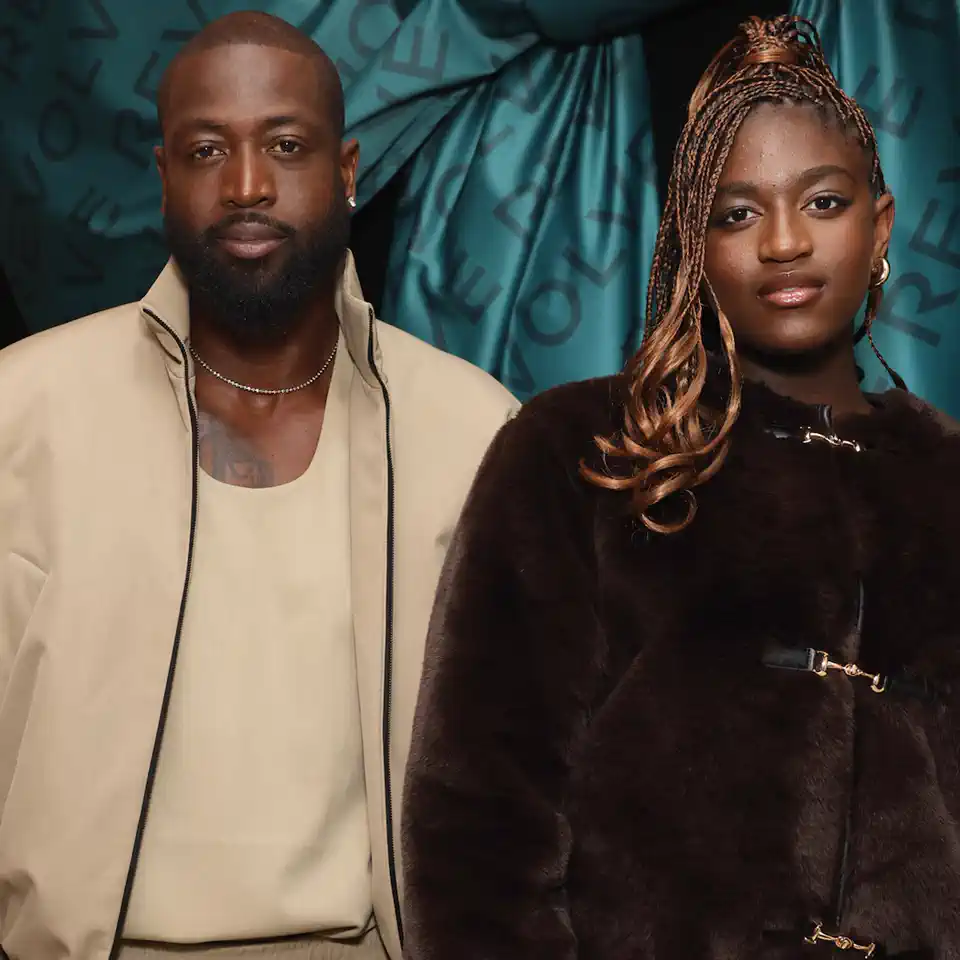
Dwyane Wade’s latest comments about Zaya made fatherhood sound less like a role he performs and more like a practice of listening that reshaped his public identity
The quote resonated because it centered Zaya Wade’s influence rather than simply praising her from a distance
Celebrity parents often default to broad declarations of support, but Dwyane Wade’s latest comments carried more substance than that. E! reported that Wade described learning from Zaya’s courage and sense of safety while speaking at the Translatable ball, which shifted the story away from generic parental pride and toward the idea that a child can actively transform the emotional vocabulary of a family.
That distinction matters because Dwyane and Gabrielle Union’s public support for Zaya has long been visible, but visibility alone is no longer enough to hold attention. What gives this story staying power is that Wade framed fatherhood as something shaped by Zaya’s example, not just safeguarded by his own authority.
Why courage has become the central word in the Wade family’s public narrative
The Wade family story has endured because it does not read like a one-off advocacy splash. Over time, the language around Zaya has consistently emphasized safety, confidence and self-definition, which gives new interviews a sense of continuity instead of repetition.
That continuity is also reinforced by the family’s own work. Dwyane’s comments align with the wider mission around Translatable, the nonprofit he launched with Zaya to support LGBTQIA+ youth. When a family’s words and actions track together this closely, the public is more likely to read their message as earned rather than performative.
The larger takeaway is that celebrity parenthood now carries more weight when it shows humility, not just protection
Audiences are far more responsive now to celebrity parents who acknowledge they are still learning. Wade’s remarks worked because they did not present him as a flawless guide. They presented him as someone whose understanding deepened because he paid attention to his daughter.
That is a more modern form of authority. It replaces top-down reassurance with demonstrated growth, and it gives the family’s advocacy a tone that feels collaborative rather than staged for applause.
The verdict is that the moment mattered because it confirmed how much Zaya Wade has shaped the family’s public meaning
Dwyane Wade’s quote did more than generate another warm celebrity-parent headline. It clarified the family dynamic that has made these updates matter for years: Zaya is not just the subject of support, she is also one of its clearest architects.
That is why the story has reach beyond red carpets and celebrity interviews. It offers a more serious point about public parenthood: the strongest families in the spotlight are often the ones willing to admit that the child helped lead the adults somewhere wiser.