What Phoebe Bridgers actually announced
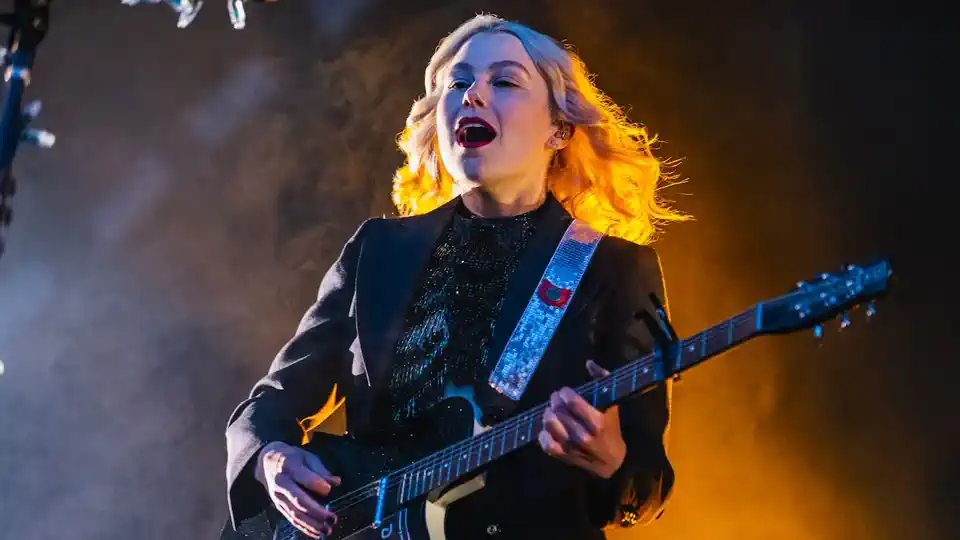
Phoebe Bridgers announced The Lost Tour on June 7 – her first full-band solo arena run since 2023 – kicking off in Indianapolis in September with a North American leg, a European stretch in November, and two hometown shows at Los Angeles' Intuit Dome. Consequence laid out the routing, the ticket-buying logistics, and the central condition that every venue will lock all phones, smart watches, and accessories in Yondr pouches for the duration of the show.
Each ticket sold on the North American leg sends $1 to RAINN, and Bridgers' UK and European dates direct ticket proceeds to organizations supporting survivors of sexual assault and violence. The phone-free policy is not a soft request – it is a venue-level enforcement applied to every attendee.
Why an arena-scale phone-free tour is a real bet
Yondr pouches have been used by comedians, smaller theater shows, and some headlining tours, but a full-arena run held to a no-phones standard from soft tickets through encore is significantly harder to operate. Every venue staff training has to absorb the policy, every guest interaction has to enforce it, and every clip the audience would normally film and share gets locked at the door.
That last point is the commercially counterintuitive piece. Modern tours run on user-generated promotional content. Phone-free shows trade that distribution loss for a more concentrated live experience, and the bet is that the resulting word-of-mouth is qualitatively stronger than what a feed of vertical clips would have produced anyway.
The Madison Square Garden test that shaped this decision
Bridgers ran a phone-free benefit show at Madison Square Garden earlier in the spring and described the audience as an 'internet-free zone.' The crowd response – sustained quiet during ballads, fully present singalongs during the catalog tracks – gave the team enough data to greenlight the full-arena version.
That run also surfaced an unexpected operational benefit. Without phones recording, the band had latitude to road-test unreleased songs publicly without those songs leaking. For an artist mid-writing a new record, that creative privacy is a meaningful working asset.
How this fits the broader 2026 touring conversation
The Lost Tour lands at a moment when touring economics are under unusual stress – venue fees rising, ticket-pricing schemes drawing public criticism, and audiences increasingly questioning what the in-room experience even justifies anymore. Bridgers' answer is to make the in-room experience deliberately different from what audiences could buy elsewhere.
It is also worth noting how few major touring acts have committed to this format at the arena level. The list is short: Chris Rock, Dave Chappelle, Bo Burnham specials, occasional Jack White runs. Bridgers is the first arena-scale pop artist of this generation to commit a full tour to it.
The verdict on what The Lost Tour signals
The strongest takeaway is that the phone-free tour is not a nostalgia move or an anti-tech statement. It is a creative-production decision – Bridgers is protecting both the in-room dynamic and the right to play unreleased material before the writing is fully public.
The contrarian read is that the next twelve months of major-tour announcements will increasingly experiment with similar restrictions, and The Lost Tour will be the operational reference point producers measure their own logistics against. The phones-out-of-pouches model that has run unchallenged for fifteen years is finally facing a credible alternative at scale.