
What Netflix and T-Street have now confirmed
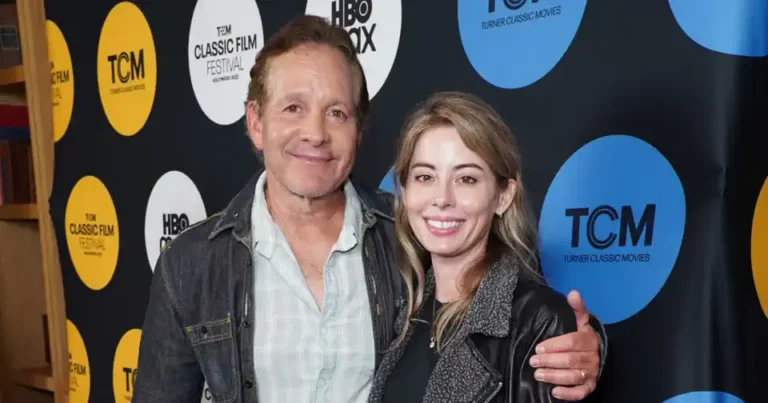
Joseph Gordon-Levitt's untitled Netflix AI thriller has added Alfre Woodard, Toni Collette, Chloe Coleman, and Sagar Radia to its cast, joining the previously announced Rachel McAdams, Joel Edgerton, Jeff Daniels, Nnamdi Asomugha, and Caleb McLaughlin. Gordon-Levitt directs from a script he co-wrote with Kieran Fitzgerald, with story credit shared with Natasha Lyonne. Rian Johnson and Ram Bergman's T-Street produces. Deadline confirmed the newest cast additions, the Belgrade and Montenegro shooting locations, and the production wrap target sometime in 2027.
Plot details and character assignments remain entirely under wraps. Netflix acquired the project last fall and has not announced a release date.
Why this specific assembly of actors signals a particular kind of film
Cast composition reveals more about a film's tonal target than any logline does. Woodard, Collette, McAdams, Daniels, Edgerton – that is a dramatic-prestige register at every casting tier. None of these actors are known for high-concept genre work as their primary identity. The film is going to operate in the same dramatic-grounded space that made Looper, Don't Worry Darling, and Annihilation work, regardless of how technologically loaded the AI premise reads on paper.
Coleman's addition is the structural giveaway. She has built a specific catalog around grounded, emotionally direct child performances. Casting her into an AI thriller signals that the story has a meaningful generational dimension – the AI is not the antagonist abstracted into a system, but something that operates in proximity to a recognizable young person whose interior life is the audience's emotional anchor.
The T-Street and Natasha Lyonne involvement is doing real work
Rian Johnson's T-Street has rapidly become the most selective mid-budget production company in streaming, producing only projects with strong individual creative identities. Their involvement here signals Netflix is treating this as a director-driven prestige bet, not a content-fill streamer commission.
Lyonne carrying story credit alongside Gordon-Levitt and Fitzgerald is even more revealing. Her writing voice – bent, sardonic, structurally unconventional – is unmistakable in any project she helps shape. Sharing story credit with the director means her sensibility is meaningfully embedded in the script, which gives the AI premise a register most genre-coded AI films cannot match.
Why the Belgrade and Montenegro shoot matters
Streaming-feature productions of this budget tier rarely shoot in Belgrade. The location signals one of three things – a meaningful Serbian financial incentive, a need for specific architectural environments not easily available in the US or UK, or a deliberate choice to make the visual world feel disorienting in a way American or Western European locations cannot.
Montenegro as a secondary location reinforces all three possibilities at once. The Balkans give the film access to mixed urban-industrial-coastal environments within a small geographic radius, which is exactly the kind of versatility a tonally ambiguous AI thriller would need to build a coherent visual world that does not feel rooted in any specific real-world city.
The verdict on what this casting cycle confirms
The strongest takeaway is that Netflix and T-Street have built a casting roster credible enough to justify the prestige-thriller positioning the project is now openly claiming. The film will be evaluated as a serious original-idea streamer, not as a content-fill assignment.
The contrarian read is that the most informative element of this casting cycle is not who joined. It is the cumulative pattern that, eleven cast names in, the project has not added a single name that would push the tonal register toward genre or franchise. That kind of casting discipline is rare in streaming features and signals the team is protecting a specific creative vision against the gravitational pull streaming usually exerts on these projects.