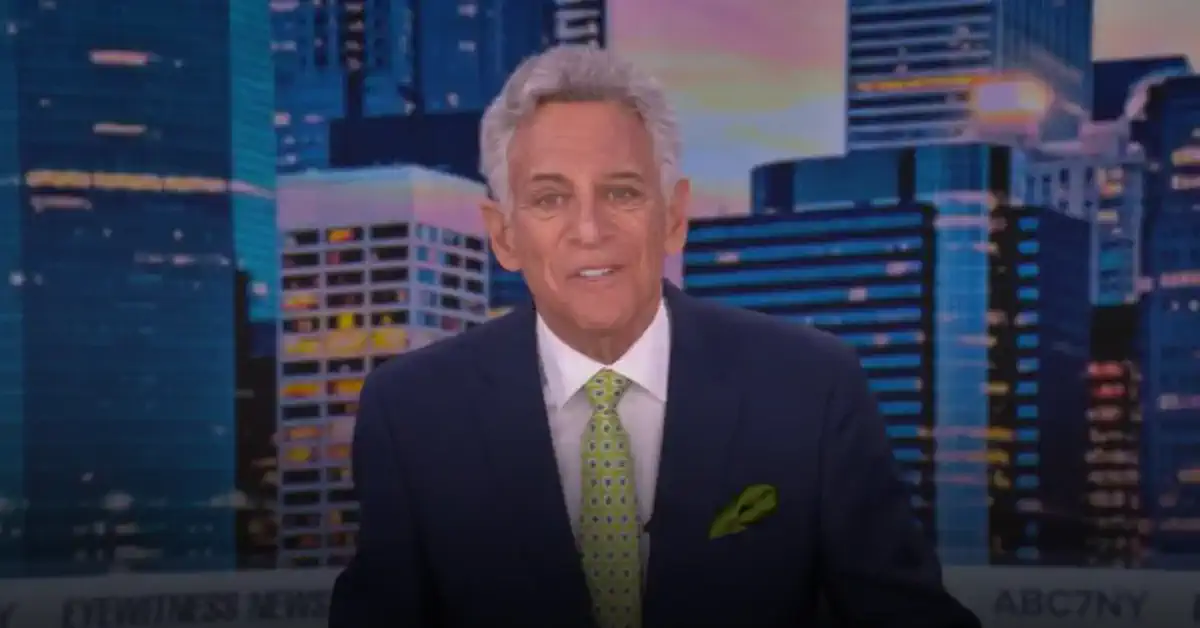
Veteran WABC-TV Eyewitness News anchor Bill Ritter told New York viewers during the Friday, June 13, 2026, 6 p.m. broadcast that he has been diagnosed with early-stage Alzheimer's disease and that the same broadcast was his last as the station's full-time anchor after twenty-five years in the chair. Deadline carried the full announcement on Saturday morning, alongside the full text of Ritter's on-air remarks. Ritter will continue at Eyewitness News in a reduced reporting capacity, the station confirmed.
Ritter framed the announcement as a personal address to his audience, opening with the line: "I'd like to share a very personal message with you." He moved into the diagnosis itself, telling viewers:
They say the treatments I'm getting are keeping it at bay, at least for now. But there is no guarantee, because there's no cure yet for Alzheimer's.
He also told the audience his "life has taken a turn," and noted that he is "not a stranger to this disease," recalling that his father died with Alzheimer's in June 1998.
The twenty-five-year tenure is the part of Ritter's WABC career the New York television-press cluster will return to first. He joined the station as a reporter in 1999 and took the 6 p.m. anchor chair in 2001, where he has worked alongside Liz Cho since 2003. The pairing has been the highest-rated New York local-news broadcast for the better part of two decades, and Ritter's voice has been the audio shorthand for the city's biggest local news cycles, from September 11 to Hurricane Sandy to the 2020 lockdown stretch.
The early-stage framing is the medical detail that will shape the reduced-capacity arc. Early-stage Alzheimer's disease typically allows patients to continue work activities they have long-established muscle memory for, with adjustments for the cognitive-load patterns the disease initially affects. Local-news reporting on familiar beats, particularly recurring stories like the New York City political-power cycle Ritter has covered for two decades, falls into that category, and the station's transition plan reportedly preserves space for him to continue producing field reports.
The personal-history thread is the part Ritter has been most explicit about. His father died with Alzheimer's in 1998, which placed Ritter at elevated genetic risk that he has spoken about in interviews periodically across the past decade. The 2024 launch of two FDA-approved early-stage disease-modifying treatments, lecanemab and donanemab, has produced the current treatment-protocol option Ritter referenced in his on-air statement as "keeping it at bay," and the medical-press cluster will read his case as an early high-visibility test of those treatments' real-world maintenance trajectory.
Liz Cho's role moving forward is the structural question the station has not yet addressed publicly. Cho has been the co-anchor across Ritter's entire 6 p.m. tenure, and the station's executive-producer team will face the decision of whether to install a permanent second anchor at the desk or to keep a rotating chair until the 2027 fall news cycle. The local-news ratings landscape in New York has been compressing across the past three years as audiences shift to streaming and 6 p.m. local-news ratings have remained one of the few stable revenue properties for ABC's owned-and-operated stations.
What sits ahead in the broader Ritter cycle is the reduced-capacity reporting work and the inevitable Alzheimer's-advocacy press cycle that high-profile diagnoses produce. The Alzheimer's Association is reportedly already in early contact with his representation about a possible spokesperson role through the 2027 fundraising cycle, which would extend his public-facing presence well beyond the local-news context the announcement landed inside. Whether he accepts that role, and how visibly he steps into it, will define the rest of his on-record presence through the back half of the decade.